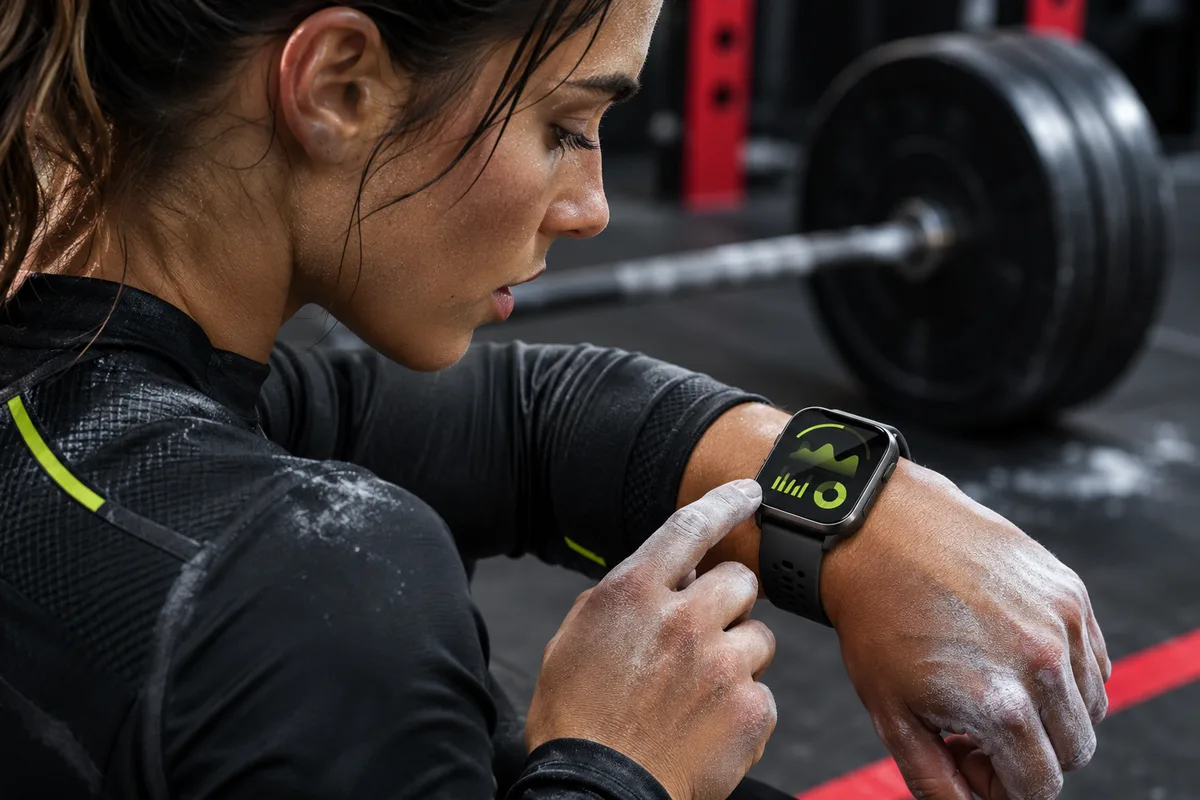
Wearable technology remains the leading trend in the American College of Sports Medicine’s worldwide fitness survey for 2026. The category includes devices and sensors that track activity, heart rate, sleep and other training or health signals.
The ranking is a professional survey, not proof that every metric is accurate or that a device improves outcomes by itself. Its value is market direction: coaches, facilities and consumers continue to place measurable feedback near the centre of the fitness experience.
The adjacent opportunity
The 2026 discussion gives more attention to recovery, longevity, exercise for mental health, rehabilitation and chronic-disease management. That supports a broader ShreddedAF technology desk: devices should be judged on validated measurements, useful decisions and subscription value—not feature count.
Audit rule for devices
A wearable will never receive a high ShreddedAF score because it looks advanced. Reviews must separate sensor validity, software interpretation, behaviour change, privacy, ongoing cost and the evidence for any health claim.
A trend ranking is not a validation study
The ACSM survey tells us what fitness professionals expect to matter. It does not test whether a particular watch measures sleep stages accurately, whether a readiness score improves programming or whether another subscription produces better health. Market direction and measurement validity are separate questions and should stay separate in every ShreddedAF device review.
The ranking does, however, explain why wearable claims deserve more scrutiny. As devices move from counting steps toward interpreting recovery, stress and health risk, the cost of a bad inference increases. A heart-rate sensor can be evaluated against a reference method. A proprietary “body battery” combines data and assumptions that may be harder to audit.
The five-part device audit
First, identify what the hardware actually measures. Second, separate measured signals from algorithmic estimates. Third, test whether the estimate leads to a useful decision. Fourth, count the full cost, including required subscriptions. Fifth, inspect privacy, export and deletion controls. A device can be technically impressive and still be a poor purchase if it creates noise, locks useful history behind a fee or encourages anxiety without better action.
Who benefits—and who may not
A serious recreational athlete may benefit from consistent training logs, heart-rate trends and repeatable workload context. A beginner may gain more from simple step and activity feedback than from an elaborate recovery score. Competitive athletes need validation under the movements and conditions they actually perform. Some users are better served by fewer metrics and a stable training plan.
ShreddedAF will therefore cover wearables as decision tools, not status objects. Product of the Month eligibility will require a completed audit and a defensible use case; popularity, launch excitement and feature count will add no points.
Subscription value belongs inside the score
The purchase price is only the first cost when interpretation, history or coaching features require a subscription. Reviews should calculate the first-year and continuing cost, identify what disappears without payment and ask whether the device still produces a useful training decision.
A cheaper device with exportable, understandable data can be more valuable than a sophisticated platform that creates dependency. Hardware accuracy, software usefulness and commercial lock-in are separate audit dimensions.
Editorial consequence
Wearables will receive dedicated audits only when the exact device, software tier and measurement claims can be identified. A review based on a product family name would miss sensor changes, subscription differences and regional features. The unit of analysis must be the product the reader can actually buy.